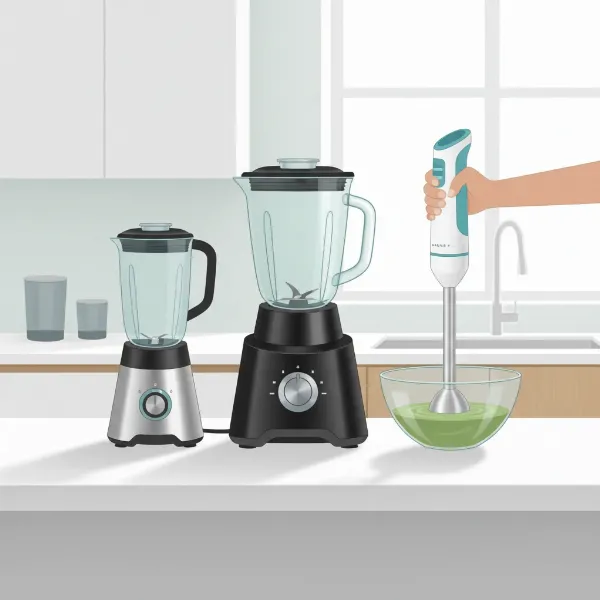
Choosing the right blender can transform your culinary adventures, whether you’re a seasoned chef or a home cooking enthusiast. But with so many options, deciding between an immersion blender and a countertop blender often leaves cooks pondering which tool truly suits their needs. Both appliances are kitchen powerhouses, yet they excel at fundamentally different tasks, offering distinct advantages and limitations. Understanding these differences is key to making an informed decision that enhances your kitchen workflow and delivers perfect results every time. Let’s delve into the world of blenders to help you discover the ideal blending companion for your home.
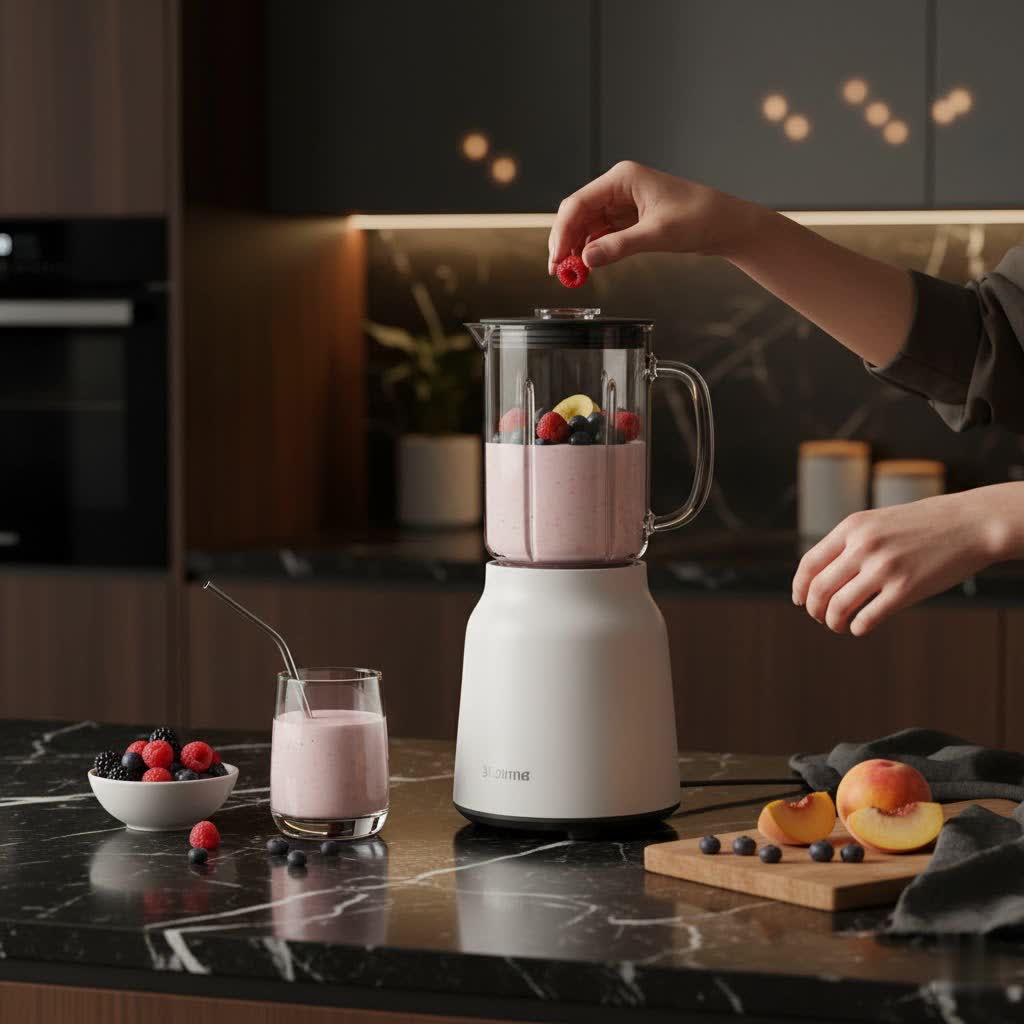
How to Choose the Perfect Blender: Immersion vs. Countertop
Selecting a blender isn’t just about raw power; it’s about matching the appliance to your specific cooking style, kitchen space, and desired results. While a powerful motor is often a primary consideration, factors like convenience, capacity, and ease of cleaning also play crucial roles. This detailed guide will help you navigate the features of both immersion and countertop blenders, ensuring you pick the tool that best fits your lifestyle.
Types of Blenders: Immersion and Countertop Explained
|
Our Picks for the Best Blender in 2026
As an Amazon Associate I earn from qualifying purchases.
|
||
| Num | Product | Action |
|---|---|---|
| 1 | Ninja Professional Blender, Smoothie Blender, Drink Mixer, Grinder, Ice Crusher, Frozen Fruit Blending | Professional 1000 W Power, Total Crushing ™ Technology, XL 72-oz. Pitcher Black, Grey, BL610 |

|
| 2 | BLACK+DECKER PowerCrush Multi-Function Blender with 6-Cup Glass Jar, 4 Speed Settings, Silver |
|
| 3 | bella 10 Speed Countertop Blender, Juicer & Smoothie Maker, Fits-anywhere™ Kitchenware, Slim Flip & Store Design, Dishwasher Safe 48oz Capacity Pitcher & Lid, Stainless Steel Blade, 450 Watt, Oatmilk |
|
| 4 | BLACK+DECKER Crush Master Blender, 10-Speeds with Stainless Steel Blades, Black, BL2010BP |
|
| 5 | Aeitto Blenders for Kitchen with 1800W Motor, 68Oz. Large Capacity, 2-in-1 Blender & Grinder Combo, BPA-Free Countertop Professional Blender for Smoothies, Ice Crush, Frozen Drinks, Black |
|
| 6 | Hamilton Beach Power Elite Wave Action Blender For Smoothies, 40 Oz Glass Jar, 12 Functions Including Puree, Crush Ice, 700 Watts - Black (58148A) |
|
| 7 | nutribullet Full-Size Blender Combo 1200W – NBF50500 - Dark Gray |
|
| 8 | Ninja Professional Plus Blender | Max Power Smoothie Blender, Ice Cream Maker, Frozen Drink Mixer & Margarita Machine | 3 Auto IQ™ Presets, 1400 W, 72oz Total Crushing Pitcher | Dark Grey, BN701 |
|
| 9 | Magic Bullet Blender, Small, Silver, 11 Piece Set |
|
| 10 | Ninja UltraCrush Professional Blender | 1000W, XL 72-oz.* Pitcher | Total Crushing Technology | 3 Manual Speeds for Ice Crushing, Smoothies, Sauces & More | Full-Size Blender | Black | BP201 |
|
Blenders come in various forms, but the two most common workhorses in a home kitchen are the immersion blender and the countertop blender. Each is designed for distinct purposes, offering unique benefits.
Immersion Blenders (Hand Blenders, Stick Blenders)
Immersion blenders, also known as hand blenders or stick blenders, are slender, handheld devices designed for blending ingredients directly in the pot, bowl, or cup they are in. This compact design features a motor in the handle and a blending shaft with a small blade at the end, often protected by a guard to minimize splatter.
Key Advantages of Immersion Blenders:
- Unmatched Convenience: The ability to blend hot soups, sauces, or gravies directly in the cooking vessel eliminates the messy and often hazardous step of transferring hot liquids to a traditional blender jar. This means less cleanup and a smoother cooking process.
- Space-Saving Design: Immersion blenders are remarkably compact. They can easily be stored in a kitchen drawer or hung on a hook, making them ideal for smaller kitchens or those with limited counter space.
- Effortless Cleaning: Typically, only the detachable blending shaft needs to be cleaned, which can often be rinsed under the tap or placed in the dishwasher. This simplifies post-cooking cleanup significantly.
- Enhanced Control and Precision: Being handheld, an immersion blender offers superior control over the blending process. You can easily adjust the angle and depth to achieve your desired consistency, whether you want a chunky salsa or a silky-smooth puree.
- Versatility for Smaller Tasks: These blenders excel at small batches, such as whisking eggs, making single-serve smoothies, creating homemade mayonnaise or salad dressings, and preparing baby food. Many models also come with attachments like whisks or mini choppers to expand their functionality.
Limitations of Immersion Blenders:
- Limited Power: Immersion blenders generally have less powerful motors than their countertop counterparts. They may struggle with tough ingredients like ice cubes, frozen fruits, or fibrous vegetables like kale, potentially leading to overheating or a less smooth result.
- Texture Differences: While excellent for most purees, they might not achieve the perfectly uniform, velvety smooth texture that high-end countertop blenders can deliver, especially for very fine blends like restaurant-quality creamy soups.
- Capacity Constraints: Their “in-pot” blending nature means the capacity is limited by your container, and they are less suited for very large quantities that require sustained, high-power blending.
Countertop Blenders (Traditional Blenders, Stand Blenders)
Countertop blenders are the classic kitchen appliance, featuring a robust motor base and a removable pitcher or jar with blades at the bottom. These blenders are designed to sit on your kitchen counter, ready for heavy-duty blending tasks.
Key Advantages of Countertop Blenders:
- Superior Power and Performance: Equipped with powerful motors (often 500 watts or more, up to 1500+ watts for high-end models), countertop blenders are ideal for crushing ice, pulverizing frozen fruits, nuts, and seeds, and tackling hard vegetables. They deliver consistently smooth results for demanding tasks.
- Generous Capacity: With large pitchers, countertop blenders are perfect for preparing family-sized smoothies, big batches of soup, sauces, or frozen drinks for entertaining guests.
- Ultimate Smoothness: The combination of powerful motors and specialized blade designs allows countertop blenders to break down ingredients at a cellular level, resulting in exceptionally smooth, lump-free textures for soups, purees, and beverages.
- Hands-Free Operation: Once loaded and started, countertop blenders operate independently, freeing your hands to work on other kitchen tasks. Many models also feature pre-programmed settings for specific recipes like smoothies or crushing ice.
- Durability and Longevity: High-quality countertop blenders are built with durable materials and robust components, making them a long-term investment for frequent, heavy use.
Limitations of Countertop Blenders:
- Bulky and Space-Consuming: Countertop blenders require significant counter space and can be challenging to store if kitchen space is limited. Their substantial size makes them less portable.
- More Involved Cleaning: The pitcher, lid, and sometimes the blade assembly need to be disassembled and thoroughly cleaned. Food particles can get trapped in crevices, making cleaning more time-consuming than with an immersion blender.
- Messy Transfers for Hot Liquids: Blending hot ingredients in a countertop blender often requires careful transfer from the cooking pot to the blender jar, which can be messy and carries a risk of burns.
- Higher Price Point: Countertop blenders, especially high-performance models, tend to be more expensive than most immersion blenders.
- Noise Level: Due to their powerful motors, countertop blenders can be quite loud during operation, which might be a consideration in open-plan living spaces.
Key Factors to Consider When Buying a Blender
When deciding between an immersion and a countertop blender, or even choosing a specific model within each category, several factors should guide your purchase.
- Power and Performance: Consider the motor wattage. For occasional light blending (e.g., soft fruits), an immersion blender or a lower-wattage countertop model might suffice. If you plan to crush ice regularly, make nut butters, or blend frozen ingredients, a countertop blender with at least 500-1000 watts is essential. High-performance blenders can reach 1500 watts or more.
- Capacity: How much do you typically blend? Single servings or small batches (e.g., salad dressing) are ideal for immersion blenders. For family meals, entertaining, or meal prepping large quantities, a countertop blender with a 1.4L to 2L (48-64 oz) pitcher will be more suitable.
- Versatility: Look at the attachments and functions. Many immersion blenders come with whisk, chopper, or food processor attachments, making them incredibly versatile. Countertop blenders often have multiple speed settings, pulse functions, and pre-programmed cycles for specific tasks.
- Ease of Cleaning: For quick cleanup, immersion blenders are often the winner. If you opt for a countertop blender, look for models with dishwasher-safe parts and easily removable blades to simplify the cleaning process.
- Storage and Counter Space: If kitchen space is at a premium, a compact immersion blender is a practical choice. If you have ample counter space and prefer a permanent fixture for daily use, a countertop blender might be more convenient.
- Budget: Immersion blenders are generally more budget-friendly, with good models starting at a lower price point. Countertop blenders vary widely in price, from entry-level options to high-end professional-grade machines.
- Texture Preference: If a perfectly silky-smooth texture for soups, purees, and smoothies is paramount, a powerful countertop blender is likely your best bet. For slightly textured results or situations where absolute smoothness isn’t critical, an immersion blender delivers excellent performance.
Immersion Blender: Best Picks for Specific Needs
Immersion blenders shine in specific culinary scenarios where convenience and precision are paramount.
- For Soups and Sauces: An immersion blender is indispensable for pureeing creamy soups directly in the pot, creating smooth gravies, or blending tomato sauces without the hassle of transferring hot liquids.
- For Small Batches and Dressings: When you need a quick batch of homemade mayonnaise, hollandaise sauce, or salad dressing, an immersion blender offers unparalleled convenience and control for emulsification.
- For Baby Food: Its ability to blend small quantities directly in a bowl makes it perfect for preparing fresh, customized baby food purees.
- For Whipping Cream or Beating Eggs: With a whisk attachment, an immersion blender can quickly whip cream to fluffy peaks or beat eggs for omelets.
Countertop Blender: Top Choices for Power and Capacity
Countertop blenders are the go-to for tasks demanding brute force and larger volumes.
- For Smoothies and Ice Crushing: A powerful countertop blender is essential for consistently smooth, icy drinks. It effortlessly pulverizes ice, frozen fruits, and tough greens into a perfectly blended concoction.
- For Nut Butters and Flours: High-performance countertop blenders can transform nuts into creamy butter or grind grains and seeds into fine flours with their robust motors and specialized blade designs.
- For Large Family Meals: If you’re regularly preparing smoothies for several people, large batches of soup, or pancake batter for the whole family, the generous capacity of a countertop blender is invaluable.
Using and Maintaining Your Blender for Longevity
Proper usage and maintenance are crucial for extending the lifespan of any kitchen appliance.
- Safety First: Always ensure the immersion blender is submerged below the food level before turning it on to prevent splattering. For countertop blenders, secure the lid tightly before blending and avoid overfilling the jar. Never operate either blender when the blades are exposed or easily accessible.
- Cleaning Routine: For immersion blenders, detach the blending shaft immediately after use and rinse it thoroughly. A quick swirl in soapy water can help dislodge food particles. For countertop blenders, rinse the jar and lid immediately. Many jars are dishwasher safe, but check manufacturer instructions. For stubborn residue, fill the jar with warm water and a drop of dish soap, then run the blender for a few seconds before rinsing.
- Troubleshooting Common Issues: If your blender struggles, ensure you haven’t overloaded it. For countertop blenders, add liquids first, then softer ingredients, followed by harder ones. For immersion blenders, move the wand up and down gently to ensure all ingredients reach the blade. If the motor overheats, turn it off and let it cool down before attempting to blend again.
Detailed Comparison Table: Immersion vs. Countertop Blenders
| Feature | Immersion Blender (Hand Blender) | Countertop Blender (Stand Blender) |
|---|---|---|
| Design | Handheld, stick-like | Base with removable pitcher/jar |
| Power | Generally lower (150-600W) | Higher (500W – 1500+W) |
| Best For | Soups in pot, sauces, small batches, dressings, baby food, whipping cream, eggs | Smoothies, ice crushing, frozen drinks, nut butters, large batches, tough ingredients |
| Capacity | Limited by container used, small batches | Large (1.4L – 2L+), family-sized batches |
| Cleaning Ease | Very easy; detachable shaft rinses quickly | More involved; multiple parts to disassemble and clean |
| Storage | Compact, fits in drawer or hangs | Bulky, requires counter or cabinet space |
| Texture Quality | Good for most purees, may have slight texture | Excellent for ultra-smooth, velvety results |
| Noise Level | Generally quieter | Can be quite loud |
| Portability | Highly portable | Stationary, not portable |
| Price Range | More affordable | Wider range, typically higher |
| Operation | Manual, requires holding | Hands-free operation |
Choosing Your Ideal Blender
Ultimately, the choice between an immersion blender and a countertop blender hinges on your individual cooking habits and kitchen needs. If you prioritize convenience for everyday tasks like pureeing soups in the pot, making quick dressings, and saving space, an immersion blender is an invaluable tool. Its compact size and ease of cleaning make it a stellar choice for smaller kitchens or for cooks who value efficiency over sheer power.
However, if your culinary routine involves daily smoothies with ice and frozen fruit, preparing large batches for family meals, or tackling tough ingredients like nuts and fibrous vegetables, a powerful countertop blender is the superior option. It delivers unmatched smoothness and capacity, making light work of demanding blending tasks.
Many cooking enthusiasts find that owning both an immersion blender and a countertop blender offers the best of both worlds. The immersion blender handles the quick, precise, and mess-free tasks, while the countertop blender steps in for heavy-duty blending, large volumes, and achieving ultra-smooth textures. Consider your most frequent blending needs, your kitchen’s footprint, and your budget to determine which blending solution will bring the most joy and efficiency to your culinary endeavors.
Frequently Asked Questions
Can an immersion blender crush ice?
While some more powerful immersion blenders might handle small amounts of crushed ice, they are generally not designed for crushing whole ice cubes or large quantities of frozen ingredients. Countertop blenders are much better suited for ice crushing due to their stronger motors and robust blade systems.
Is an immersion blender as good as a regular blender for smoothies?
For very smooth, thick smoothies with frozen fruit and ice, a countertop blender typically provides superior results. Immersion blenders can make decent smoothies, especially with softer fruits and liquids, but may leave small chunks or struggle with harder frozen ingredients, resulting in a less consistent texture.
What should you not put in an immersion blender?
Avoid tough, hard ingredients like whole ice cubes, very hard nuts, or large pieces of raw, fibrous vegetables, as these can strain the motor or damage the blades. Also, do not immerse the motor housing in liquid when cleaning, only the blending shaft.
How do I clean an immersion blender effectively?
The most effective way to clean an immersion blender is to immediately detach the blending shaft after use and rinse it under running water. For any sticky residue, submerge the blade end in a glass of warm, soapy water and briefly pulse it before rinsing thoroughly. The motor unit can be wiped clean with a damp cloth.
What’s the main reason to own both types of blenders?
Owning both an immersion and a countertop blender provides maximum versatility. The immersion blender offers unparalleled convenience for in-pot blending and quick, small tasks with minimal cleanup, while the countertop blender excels at high-power, large-volume tasks like crushing ice, making smooth purees, and handling tough ingredients. This combination ensures you have the right tool for every blending job.