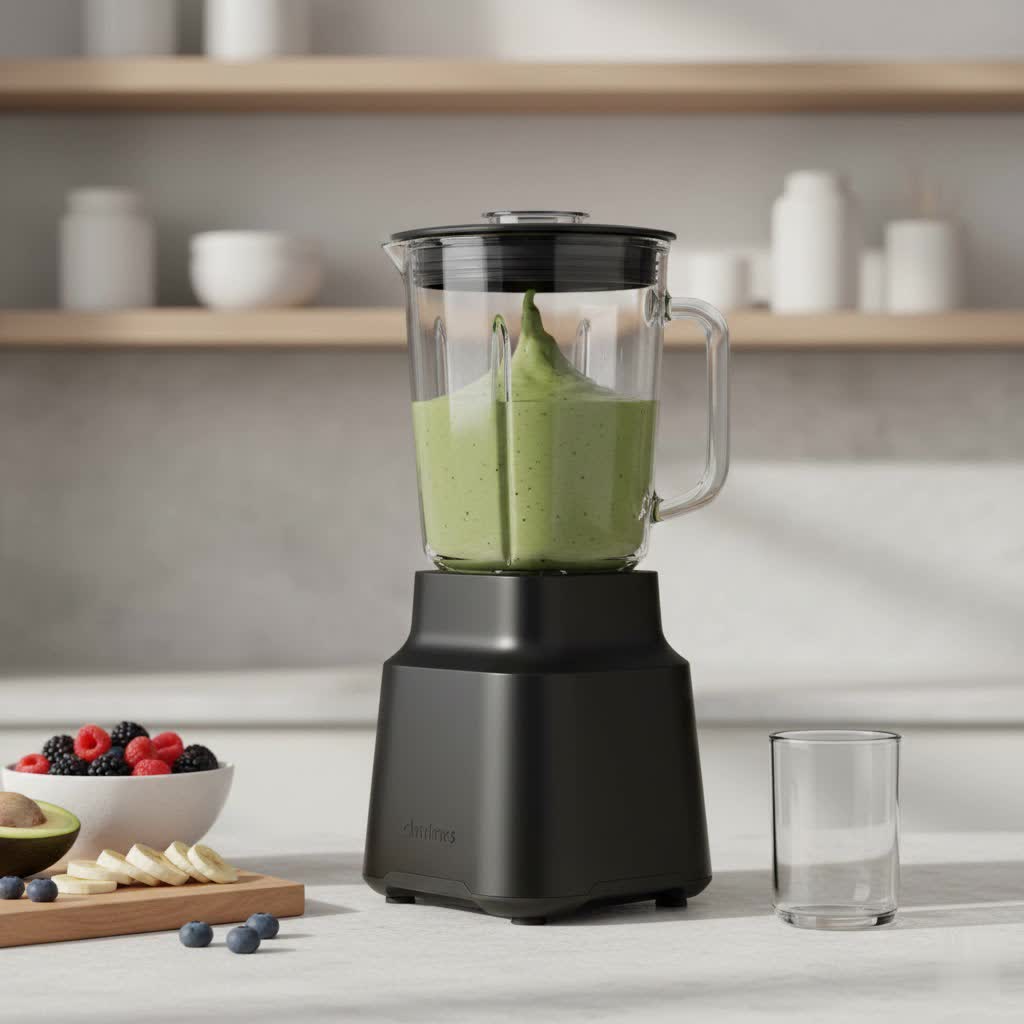
Waking up to the jarring roar of a blender can disrupt the peace of any home, especially during early mornings or late nights. For many, the desire for a perfectly smooth smoothie or a quick meal prep often comes with the unwelcome symphony of powerful motors and rapidly spinning blades. This noise isn’t just an annoyance; it can be a genuine disturbance, impacting sleep, work, or the tranquility of your living space. Fortunately, advancements in kitchen appliance technology offer a serene solution: blenders equipped with sound enclosures or innovative noise-reduction features. These specialized machines are designed to deliver exceptional blending performance without the excessive volume, transforming your kitchen into a more peaceful culinary haven.
Your Comprehensive Guide to Blenders with Sound Enclosures
Choosing the right blender with a sound enclosure involves more than just picking the quietest model. It’s about understanding the nuances of how these appliances work, what features truly matter, and which options align best with your specific needs and budget. From high-powered machines designed for commercial settings to compact personal blenders, the market offers a diverse range of choices that promise to silence the blend without sacrificing power.
Understanding Different Types of Quiet Blenders
The quest for a quieter blending experience has led to several distinct categories of blenders, each employing different strategies to reduce noise. Knowing these types helps you pinpoint the best fit for your kitchen.
- Blenders with Integrated Sound Enclosures: These are the most direct approach to noise reduction. Models like the Blendtec Professional 800 or Vitamix The Quiet One feature a robust, often acrylic or composite plastic, dome-shaped casing that fits securely over the blending jar. This physical barrier traps and absorbs sound waves, significantly lowering the decibel output during operation. They are ideal for households where noise is a primary concern and for commercial environments like cafes or juice bars where maintaining a pleasant ambiance is crucial.
- Blenders with Inherent Noise Reduction Technologies: Some manufacturers focus on engineering quieter motors, optimizing blade design, and using vibration-dampening materials within the blender’s base itself. While they might not have a separate “shield,” models like certain Breville or Black+Decker blenders utilize smart design to reduce noise from its source. These are often a good compromise for those seeking a quieter experience without the added bulk or cost of a full enclosure.
- Personal Blenders with Sound-Dampening Features: For individual servings and on-the-go convenience, some personal blenders incorporate unique sound-guarding elements. The Nutribullet Flip, for instance, uses a double-walled, insulated stainless steel pitcher that not only keeps beverages cold but also acts as an effective sound buffer. These are perfect for small kitchens, single users, or for making a quick smoothie without disturbing a sleeping household.
- Commercial Quiet Blenders: Built for continuous, heavy-duty use, commercial quiet blenders (like the Vitamix The Quiet One or specific Cranddi models) are engineered for extreme durability and superior noise suppression. They often come with more powerful motors and more substantial enclosures, making them a significant investment but indispensable in high-volume settings where both performance and quiet operation are paramount.
|
Our Picks for the Best Blender in 2026
As an Amazon Associate I earn from qualifying purchases.
|
||
| Num | Product | Action |
|---|---|---|
| 1 | nutribullet Full-Size Blender Combo 1200W – NBF50500 - Dark Gray |

|
| 2 | bella 10 Speed Countertop Blender, Juicer & Smoothie Maker, Fits-anywhere™ Kitchenware, Slim Flip & Store Design, Dishwasher Safe 48oz Capacity Pitcher & Lid, Stainless Steel Blade, 450 Watt, Oatmilk |
|
| 3 | Ninja Professional Plus Blender | Max Power Smoothie Blender, Ice Cream Maker, Frozen Drink Mixer & Margarita Machine | 3 Auto IQ™ Presets, 1400 W, 72oz Total Crushing Pitcher | Dark Grey, BN701 |
|
| 4 | Ninja Professional Blender, Smoothie Blender, Drink Mixer, Grinder, Ice Crusher, Frozen Fruit Blending | Professional 1000 W Power, Total Crushing ™ Technology, XL 72-oz. Pitcher Black, Grey, BL610 |
|
| 5 | BLACK+DECKER Crush Master Blender, 10-Speeds with Stainless Steel Blades, Black, BL2010BP |
|
| 6 | Hamilton Beach Power Elite Wave Action Blender For Smoothies, 40 Oz Glass Jar, 12 Functions Including Puree, Crush Ice, 700 Watts - Black (58148A) |
|
| 7 | Aeitto Blenders for Kitchen with 1800W Motor, 68Oz. Large Capacity, 2-in-1 Blender & Grinder Combo, BPA-Free Countertop Professional Blender for Smoothies, Ice Crush, Frozen Drinks, Black |
|
| 8 | Ninja UltraCrush Professional Blender | 1000W, XL 72-oz.* Pitcher | Total Crushing Technology | 3 Manual Speeds for Ice Crushing, Smoothies, Sauces & More | Full-Size Blender | Black | BP201 |
|
| 9 | Magic Bullet Blender, Small, Silver, 11 Piece Set |
|
| 10 | BLACK+DECKER PowerCrush Multi-Function Blender with 6-Cup Glass Jar, 4 Speed Settings, Silver |
|
Each type offers distinct advantages. While full sound enclosures provide the most dramatic noise reduction, integrated designs offer a sleeker profile, and personal blenders prioritize portability. The best choice ultimately depends on your blending frequency, the types of ingredients you process, and your tolerance for noise.
Essential Factors to Consider When Buying a Quiet Blender
To make an informed decision, consider these critical factors that differentiate one quiet blender from another:
- Noise Reduction Performance: This is paramount. Look for blenders that explicitly state their decibel levels, as this provides a concrete measure of quietness. While a standard blender might scream at 90-100 dB, top quiet models can operate as low as 64-75 dB, which is a significant difference. The effectiveness of the sound enclosure or internal dampening is key here.
- Motor Power and Performance: A powerful motor (measured in watts or horsepower) is essential for pulverizing tough ingredients like ice, frozen fruits, and nuts into silky-smooth consistencies. Quiet blenders often achieve impressive power outputs (e.g., 1200-2200 watts or 2-3.8 HP) without the accompanying racket, thanks to their noise-reducing designs. Ensure the blender can handle your most demanding tasks.
- Jar Capacity and Material: Consider the volume you typically blend. Options range from personal-sized cups (around 24 oz) to large family-sized jars (64-80 oz). Most modern blender jars are BPA-free plastic. However, some quiet blenders utilize glass or even double-walled insulated stainless steel, which can inherently offer additional sound dampening.
- Blade Design and Durability: High-quality stainless steel blades are crucial for efficient blending and longevity. Look for robust blade assemblies that can withstand repeated use with hard ingredients. The design of the blades (e.g., multi-pronged for better vortex creation) also impacts blending efficiency.
- Control Features: Modern blenders offer a variety of controls. Variable speed dials give you precise control over texture, while preset programs (for smoothies, ice crush, purees) offer one-touch convenience. Some high-end models feature intuitive touchscreens.
- Size and Design: Sound enclosures add to the overall footprint of a blender. Measure your counter space and cabinet height to ensure the blender fits comfortably. Consider the aesthetic as well, as these appliances often remain on display.
- Ease of Cleaning and Maintenance: Blending can be messy. Look for blenders with smooth surfaces, removable parts, and potentially self-cleaning functions (often achieved by blending warm water and a drop of soap). Easy cleaning ensures hygiene and hassle-free daily use.
- Price and Warranty: Quiet blenders, especially those with advanced sound enclosures, tend to be a greater investment than standard models. Prices can range from under $100 for budget-friendly quiet options to well over $1000 for commercial-grade machines. A longer warranty (e.g., 5-10 years for premium brands) reflects the manufacturer’s confidence in durability and can provide peace of mind.
Top Quiet Blenders: A Detailed Comparison
When it comes to the best blenders with sound enclosures, a few models consistently rise to the top, balancing powerful performance with remarkable quietness.
The Blendtec Professional 800 is often hailed as one of the quietest blenders available for home use, thanks to its signature sound enclosure. It boasts an incredibly powerful motor, making quick work of everything from smoothies and hot soups to nut butters and frozen desserts. Users appreciate its sleek touchscreen interface and pre-programmed cycles that deliver consistent results. Its robust build quality and impressive 10-year warranty make it a standout choice for serious home cooks who prioritize a serene kitchen environment.
For those needing commercial-grade performance with minimal noise, the Vitamix The Quiet One is a formidable contender. As its name suggests, this blender is engineered specifically for cafes and restaurants where sound control is paramount. It features a heavy-duty, magnetic sound enclosure that drastically reduces blending noise, even with its powerful motor. While its price point is substantial, its durability, blending consistency, and ability to handle high volume are unmatched, making it a professional’s top choice.
Bridging the gap between premium and budget-friendly options is the Hamilton Beach Professional Quiet Shield Blender. This model offers an excellent balance of power (1500 watts), performance, and a noticeable reduction in noise, largely due to its removable Quiet Shield. It’s a fantastic option for everyday home use, capable of crushing ice, blending smooth purees, and making delicious smoothies without causing a ruckus. Its ease of use, variable speed dial, and multiple program settings add to its appeal.
For those on a tighter budget looking for good value, the CRANDDI Commercial Blender K85 and VEVOR Quiet Shield Blender offer impressive power and sound dampening at a more accessible price. They often feature robust motors and soundproof covers, making them suitable for home users who want a quiet experience without the premium brand cost. While they may not have the refined features or extensive warranties of top-tier models, they deliver on the core promise of quieter, powerful blending.
The Nutribullet Flip Insulated Blender takes a unique approach to quiet blending for personal use. Instead of a large, separate enclosure, its double-walled insulated stainless steel pitcher naturally dampens the sound. This compact, cordless blender is surprisingly effective at crushing frozen ingredients into creamy blends while maintaining a significantly lower noise profile than traditional personal blenders, all for under $100.
Another budget-conscious option for home use is the Black+Decker Quiet Blender with Cyclone Glass Jar. While not as quiet as the high-end enclosed models, it’s designed with noise reduction in mind and features a sturdy glass jar. It offers a good overall performance for basic blending tasks and comes at a very attractive price, making it a solid choice for those stepping into the world of quieter appliances.
Choosing a Quiet Blender for Every Budget
Navigating the market for a quiet blender can seem daunting given the price variations. Here’s a breakdown to help you find the perfect blend for your wallet:
- Budget-Friendly Options (Under $200): You don’t have to break the bank for a quieter blending experience. Models like the Black+Decker Quiet Blender with Cyclone Glass Jar or the innovative Nutribullet Flip Insulated Blender offer noticeable noise reduction at an affordable price. These are ideal for individuals or small families with basic blending needs like smoothies and simple sauces, providing a more peaceful morning routine without a significant investment.
- Mid-Range Choices ($200-$500): This segment offers a great balance of power, features, and quietness. The Hamilton Beach Professional Quiet Shield Blender is a prime example, providing a removable sound enclosure, robust motor, and various preset functions that cater to diverse culinary tasks. Other contenders in this range often include value-focused commercial-style blenders like the CRANDDI Commercial Blender K85 or VEVOR Quiet Shield Blender, which deliver significant power and effective sound dampening for a reasonable cost, suitable for frequent use and more demanding recipes.
- Premium Blenders (Over $500): For the ultimate blending experience with minimal noise, premium blenders are the way to go. The Blendtec Professional 800 stands out with its state-of-the-art sound enclosure, powerful motor, and advanced controls, designed for discerning home users. Similarly, the Vitamix The Quiet One is a professional-grade machine built for high-volume commercial environments, offering unparalleled quietness and performance. These blenders represent a long-term investment in exceptional quality, durability, and a truly serene blending process, often backed by extensive warranties.
Comparing the value proposition across these price points means weighing features like motor power, jar capacity, warranty, and the degree of noise reduction against your budget and intended use. A higher price often translates to superior materials, more robust noise dampening, and enhanced durability.
Maximizing Your Quiet Blender’s Lifespan: Usage and Care Tips
Even the best quiet blender benefits from proper care and usage to ensure longevity and consistent performance.
- Proper Assembly and Secure Placement: Always ensure the blender jar is securely seated on the motor base and the sound enclosure (if applicable) is correctly closed before operation. Place the blender on a flat, stable surface. Using a silicone mat underneath can further reduce vibrations and noise, especially if your model doesn’t have a sound enclosure.
- Avoiding Overloading: Resist the urge to overfill the blender past its “max fill” line. Overloading strains the motor, leading to increased noise and potential damage. If blending a large quantity, consider working in smaller batches.
- Cleaning Tips for the Jar and Enclosure: For the jar, a quick self-clean cycle (blending warm water with a drop of dish soap) is often effective. For the sound enclosure, wipe it down regularly with a damp cloth to remove any splashes or residue. Ensure the enclosure is completely dry before storage to prevent water spots or bacterial growth.
- Regular Blade Inspection: Periodically check the blades for any signs of dullness, damage, or looseness. Dull or unbalanced blades can increase noise and reduce blending efficiency. While high-quality blades are durable, replacing them if necessary can restore performance and quiet operation.
- Ventilation Considerations: Blenders generate heat, especially powerful ones. Ensure that the motor base’s ventilation openings are not obstructed by towels, ingredients, or the sound enclosure itself (unless specifically designed to incorporate ventilation). Proper airflow prevents overheating and prolongs motor life.
By following these simple guidelines, you can ensure your quiet blender remains a high-performing and peaceful addition to your kitchen for many years.
Detailed Comparison Table of Leading Quiet Blender Models
| Feature | Blendtec Professional 800 | Vitamix The Quiet One | Hamilton Beach Professional Quiet Shield | CRANDDI Commercial K85 | Nutribullet Flip Insulated | Black+Decker Quiet Blender |
|---|---|---|---|---|---|---|
| Primary Use | Home | Commercial | Home | Home/Commercial | Personal | Home |
| Motor Power | 3.8 Peak HP / 1800W | 3 Peak HP / 2200W | 2 Peak HP / 1500W | 3 Peak HP / 2200W | 11 Volts (Cordless) | 900W |
| Noise Reduction | Full Sound Enclosure | Full Sound Enclosure | Removable Quiet Shield | Thick Soundproof Cover | Double-Walled Insulation | Quiet Crush Technology |
| Approx. dB Level | ~68 dB | ~64 dB | ~75-80 dB | ~70-75 dB | Significantly quieter | Noticeably quieter |
| Jar Capacity | 90 oz (Total) | 48 oz | 32 oz | 80 oz | 24 oz | 48 oz (Glass) / 24 oz (Personal) |
| Material | BPA-Free Plastic | BPA-Free Plastic | BPA-Free Plastic | BPA-Free Plastic | Insulated Stainless Steel | Glass / Plastic |
| Controls | Touchscreen, Presets | Presets, Speed Dial | Variable Speed Dial, Presets | Variable Speed, Presets | Single Button | Digital, Presets |
| Warranty | 10 Years | 3 Years | 5 Years | 1-2 Years | 1 Year | 2 Years |
| Price Range | Premium (>$800) | Commercial (>$1000) | Mid-Range ($200-$300) | Mid-Range ($200-$400) | Budget (Under $100) | Budget (Under $100) |
| Pros | World’s quietest for home, powerful, excellent warranty, sleek design | Ultimate quietness for commercial, robust, extremely powerful, durable | Good value, effective shield, versatile, easy to use | High power for price, good capacity, effective shield | Cordless, portable, keeps drinks cold, surprisingly quiet | Very affordable, decent quietness for price, easy to clean, glass jar |
| Cons | Expensive, large footprint | Very expensive, designed for commercial use, heavy | Not as quiet as premium models, enclosure can be bulky | Build quality may vary, shorter warranty than premium | Lower power, smaller capacity, battery-dependent | Less powerful, not as quiet as shielded models, some flimsy parts |
How to Select the Perfect Quiet Blender for Your Kitchen
Choosing the right quiet blender hinges on a clear understanding of your personal blending habits and priorities. Start by asking yourself: how often do I blend, what ingredients do I typically use, and how sensitive am I (or my household) to noise? If you’re a daily smoothie enthusiast preparing tough ingredients like ice and frozen fruits, a powerful motor combined with an effective sound enclosure, like the Blendtec Professional 800, might be worth the investment. For those needing a blender that can handle professional demands in a commercial setting, the Vitamix The Quiet One offers unparalleled noise suppression and robust performance.
Consider your budget, but remember that a higher upfront cost often translates to superior durability, more advanced noise-reduction technology, and longer warranties, offering better long-term value. For occasional use or smaller batches, a mid-range option like the Hamilton Beach Professional Quiet Shield Blender provides an excellent balance of quietness, power, and affordability. Meanwhile, portable and budget-friendly choices, such as the Nutribullet Flip or Black+Decker Quiet Blender, prove that you don’t need to spend a fortune to significantly reduce blending noise in your home. Ultimately, selecting the perfect quiet blender means finding the model that harmonizes seamlessly with your lifestyle, ensuring powerful results without disrupting your peace.
Frequently Asked Questions
Is a blender with a sound enclosure truly quiet?
Yes, blenders with sound enclosures are significantly quieter than conventional blenders. While no blender can be completely silent, these enclosures can reduce noise levels by 10-20 decibels or more, making a substantial difference in perceived loudness and allowing for comfortable conversation nearby.
What’s the difference between commercial and home quiet blenders?
Commercial quiet blenders, like the Vitamix The Quiet One, are designed for continuous, high-volume use in settings such as cafes, with robust construction and the highest levels of noise reduction. Home quiet blenders, such as the Blendtec Professional 800, offer similar noise reduction and power but are optimized for household needs and typically come with longer home-use warranties.
Can I add a sound enclosure to my existing blender?
Some third-party universal sound enclosures are available, but their effectiveness can vary significantly compared to integrated designs. For optimal noise reduction and compatibility, it is generally recommended to purchase a blender that comes with a factory-designed sound enclosure or built-in noise-reducing features.
Are quiet blenders less powerful?
Not necessarily. Many quiet blenders, particularly high-end models, are incredibly powerful, often featuring motors ranging from 1500 to 2200 watts (2-3.8 peak horsepower). The sound enclosure allows these powerful motors to operate without the disruptive noise typically associated with high-performance blending, ensuring you don’t sacrifice power for quietness.
How do I clean a blender with a sound enclosure?
Cleaning is straightforward. For the jar, blend warm water with a drop of dish soap. For the exterior and sound enclosure, simply wipe them down with a damp cloth and mild detergent, ensuring all surfaces are dry afterward. Most enclosures are designed for easy access and cleaning.