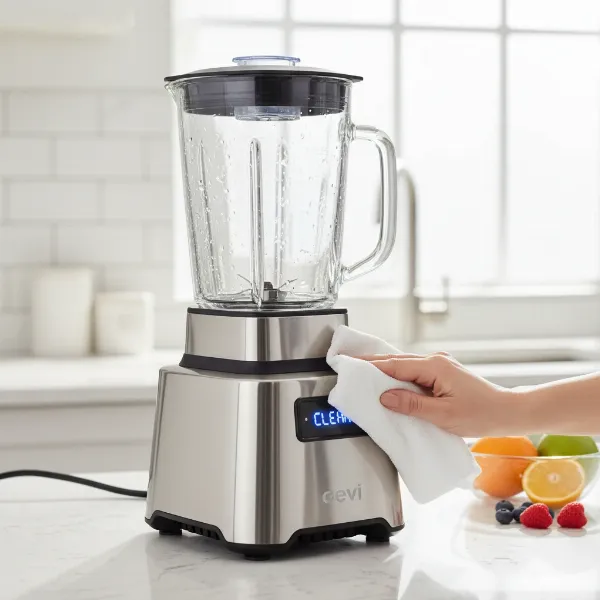
A cracked blender jar can bring your kitchen routine to a screeching halt, turning smoothie prep into a leaky mess. While a permanent, food-safe repair for a blender jar that endures high-speed blending and varied temperatures is challenging, temporary fixes can offer a brief reprieve. This guide will walk you through potential short-term solutions to seal those pesky cracks, allowing you to get a few more uses out of your blender while you plan for a full replacement. We’ll also critically examine the safety implications, ensuring you make informed choices for your kitchen.
Understanding Your Cracked Blender Jar
Before diving into repairs, it’s essential to understand why cracks form and the inherent risks they pose. A tiny fissure might seem harmless, but its implications can extend beyond mere leakage.
Why Blender Jars Crack
|
Our Picks for the Best Blender in 2026
As an Amazon Associate I earn from qualifying purchases.
|
||
| Num | Product | Action |
|---|---|---|
| 1 | BLACK+DECKER Crush Master Blender, 10-Speeds with Stainless Steel Blades, Black, BL2010BP |

|
| 2 | nutribullet Full-Size Blender Combo 1200W – NBF50500 - Dark Gray |
|
| 3 | Hamilton Beach Power Elite Wave Action Blender For Smoothies, 40 Oz Glass Jar, 12 Functions Including Puree, Crush Ice, 700 Watts - Black (58148A) |
|
| 4 | Ninja Professional Plus Blender | Max Power Smoothie Blender, Ice Cream Maker, Frozen Drink Mixer & Margarita Machine | 3 Auto IQ™ Presets, 1400 W, 72oz Total Crushing Pitcher | Dark Grey, BN701 |
|
| 5 | BLACK+DECKER PowerCrush Multi-Function Blender with 6-Cup Glass Jar, 4 Speed Settings, Silver |
|
| 6 | Ninja Professional Blender, Smoothie Blender, Drink Mixer, Grinder, Ice Crusher, Frozen Fruit Blending | Professional 1000 W Power, Total Crushing ™ Technology, XL 72-oz. Pitcher Black, Grey, BL610 |
|
| 7 | Ninja UltraCrush Professional Blender | 1000W, XL 72-oz.* Pitcher | Total Crushing Technology | 3 Manual Speeds for Ice Crushing, Smoothies, Sauces & More | Full-Size Blender | Black | BP201 |
|
| 8 | Magic Bullet Blender, Small, Silver, 11 Piece Set |
|
| 9 | bella 10 Speed Countertop Blender, Juicer & Smoothie Maker, Fits-anywhere™ Kitchenware, Slim Flip & Store Design, Dishwasher Safe 48oz Capacity Pitcher & Lid, Stainless Steel Blade, 450 Watt, Oatmilk |
|
| 10 | Aeitto Blenders for Kitchen with 1800W Motor, 68Oz. Large Capacity, 2-in-1 Blender & Grinder Combo, BPA-Free Countertop Professional Blender for Smoothies, Ice Crush, Frozen Drinks, Black |
|
Blender jars, whether made of glass or plastic, are subject to significant stress. Common culprits behind cracks include accidental drops, which can cause immediate fractures or hairline splits. Thermal shock—exposing the jar to extreme temperature changes, like pouring hot liquid into a cold jar or vice-versa—is another frequent cause, especially for glass. Over time, continuous vibration from powerful blending motors and the impact of hard ingredients like ice can also weaken the material, leading to stress cracks.
The Risks of a Cracked Jar
Beyond the obvious inconvenience of leaks and spills, a cracked blender jar presents several critical risks. The most pressing is food safety. Cracks, even seemingly superficial ones, can harbor bacteria and mold, becoming impossible to clean thoroughly. Even if an adhesive temporarily seals the crack, the internal surface may still trap food particles. Furthermore, the chemicals from non-food-safe glues can leach into your food, especially with the friction and heat generated during blending. A compromised jar also poses a structural risk; it could shatter or break further during operation, potentially causing injury or damaging your appliance.
Temporary Fixes for Blender Jar Cracks
When a new jar isn’t immediately an option, a temporary repair can buy you some time. However, it’s crucial to approach these fixes with caution and a clear understanding of their limitations.
Assessing the Damage: When a Temporary Fix is Possible (and When it’s Not)
Not all cracks are created equal, and some simply aren’t suitable for temporary repair. A temporary fix is generally only advisable for small, hairline cracks that haven’t compromised the structural integrity significantly, or for cracks located purely on the exterior that don’t come into direct contact with food or liquid.
- Hairline Cracks: Small, superficial cracks might hold with a temporary adhesive, especially if they are high up on the jar and less exposed to blending forces or liquids.
- External Cracks: If a crack is on the exterior and doesn’t fully penetrate to the interior, it might be sealed to prevent further propagation.
- Major Breaks or Cracks in Critical Areas: If the crack is large, deep, or extends near the blade assembly or the base where it connects to the motor, a temporary fix is not recommended. The high-stress environment of blending will likely cause these repairs to fail quickly and dangerously. Any crack that creates an unstable or jagged edge also warrants immediate replacement.
Choosing the Right Adhesive for a Temporary Seal
Selecting an appropriate adhesive for a temporary blender jar repair involves balancing sealing power with potential food contact issues. Remember, these are not long-term, food-safe solutions for internal surfaces.
- Super Glue (Cyanoacrylate):
- Pros: Dries quickly, forms a strong bond on many plastics and glass. Can be effective for very small, non-structural hairline cracks.
- Cons: Becomes brittle when cured, making it susceptible to failure under the blender’s vibration and impact. Not designed for food contact and can release fumes or chemicals.
- Epoxy:
- Pros: Generally stronger and more durable than super glue. Some epoxies, particularly certain “marine epoxy putties” like J-B Weld, are claimed to be non-toxic after curing. This makes them a more appealing option for temporary external repairs where there is no direct food contact.
- Cons: Longer curing time. While some are “non-toxic” when cured, they are typically not FDA-approved for direct or prolonged food contact, especially with hot or acidic ingredients, or under the mechanical stress of blending. Using it on the inside of the jar is highly discouraged due to potential leaching and cleaning difficulties.
- Food-Safe Silicone Sealant:
- Pros: Offers flexibility, which can be beneficial in accommodating the jar’s movement and preventing the crack from spreading further. Specific silicone sealants are available that are certified food-safe by organizations like the FDA, making them a safer choice if the repair must come into contact with food. These are often used for aquariums or food-grade gaskets.
- Cons: May not provide as rigid a structural repair as epoxy. Requires careful application and a significant curing time (often 24-48 hours) to ensure a complete, food-safe seal. Its flexibility might also be a disadvantage if the crack experiences significant shear forces.
- Clear Gel Adhesive:
- Pros: Often thicker than liquid super glue, providing a better gap-filling ability for slightly wider cracks. Similar quick-drying properties for some variants.
- Cons: Shares many of the same food safety and durability concerns as standard super glue. Check product specifications carefully for compatibility with the jar’s material and any safety ratings.
When choosing any adhesive, always read the product label carefully for instructions, curing times, and any warnings regarding food contact or temperature resistance.
Step-by-Step Guide to Applying a Temporary Seal
If you decide to proceed with a temporary repair, precision and patience are key. This method is generally for external applications or minor cracks where no food contact is intended.
- Clean and Dry: Thoroughly clean the cracked area, both inside and out, with soap and water. Ensure it is completely dry before applying any adhesive. Residue can prevent the glue from bonding properly.
- Prepare the Area: For plastic jars, lightly sand the area around the crack with fine-grit sandpaper. This creates a rougher surface for the adhesive to grip. For glass, sanding is not recommended as it can weaken the glass further.
- Apply Adhesive:
- For Super Glue/Clear Gel Adhesive: Apply a very thin, even bead directly along the crack line on the exterior of the jar. If the crack is visible from both sides, try to apply it only to the outside.
- For Epoxy: Mix the two parts of the epoxy according to the manufacturer’s instructions. Apply a small amount over the crack, ensuring it fills the fissure. You might use a small applicator or toothpick to press it gently into the crack.
- For Food-Safe Silicone Sealant: Apply a continuous bead over the crack, ensuring good adhesion to the surface around it. Smooth it out for a uniform seal.
- Cure Time: Allow the adhesive to cure completely. This is crucial for both strength and minimizing potential off-gassing. Super glue typically cures in minutes, but epoxy and silicone can take hours or even a full 24-48 hours to reach maximum strength and non-toxicity. Follow the manufacturer’s specified cure time strictly.
- Test for Leaks: Before blending food, perform a water test. Fill the jar with water and let it sit for a few minutes to check for any leaks. Blend water on a low setting to see how the repair holds up under vibration. If any leakage occurs, the repair has failed and should not be used for food.
Critical Considerations for Temporary Blender Jar Repairs
While tempting, a temporary fix carries significant caveats that must be understood and respected. The unique demands of a blender mean that most repairs are inherently limited.
The Imperative of Food Safety
This is the most critical aspect of repairing a blender jar. Most household adhesives, including super glues and standard epoxies, are not designed or certified for food contact. Chemicals from these glues can leach into your food, especially when exposed to the heat, friction, and varied pH levels of blended ingredients. Even “non-toxic” adhesives often refer to their state after full curing and are typically not tested for dynamic, high-stress food environments. Small crevices left after a repair can also become breeding grounds for bacteria, posing a serious health risk that cannot be easily sanitized. Always assume that unless an adhesive is explicitly labeled as “FDA-approved food-grade” for high-temperature and dynamic food contact, it should not be used on surfaces that touch your food. Even with certified products, long-term integrity under blending conditions is not guaranteed.
Durability Limitations and Vibrational Stress
Blenders are powerful appliances, designed to pulverize ingredients at high speeds. This creates immense vibrational stress and impact forces on the jar. Any adhesive, no matter how strong, will be subjected to these extreme conditions. Temporary fixes are highly prone to failure due to:
- Vibration: Constant shaking can weaken the adhesive bond over time.
- Impact: Blending ice or frozen fruits creates internal impacts that can stress the repaired area.
- Temperature Changes: Hot liquids can soften some adhesives or cause differential expansion between the jar material and the adhesive, leading to cracks in the seal.
- Cleaning: Repeated washing, especially in a dishwasher, can degrade the adhesive.
Ultimately, a temporary fix is unlikely to withstand the rigors of regular blending for an extended period.
When to Prioritize Replacement
Despite the desire to extend the life of your appliance, there are clear instances where replacement is the only safe and sensible option:
- Cracks in the Blade Assembly: If the crack is in the part of the jar that holds the blades or connects to the motor, it’s a critical structural failure. Do not attempt a temporary fix; replace the jar immediately.
- Large or Spreading Cracks: Any crack that is extensive, deep, or visibly growing indicates a significant loss of structural integrity.
- Cracks at the Base or Handle: These areas bear significant weight and stress during use, making repairs unreliable and potentially dangerous.
- Food Safety Concerns: If you cannot guarantee that the adhesive used is genuinely food-safe for blending purposes, or if you notice any discoloration, odor, or deterioration around the repair, replace the jar. Your health is not worth the risk.
Beyond the Fix: Long-Term Solutions and Alternatives
While a temporary fix can offer a brief respite, planning for a long-term solution is essential. This often means replacing the jar or considering the lifespan of your blender.
Seeking a Replacement Jar
The most straightforward and safest long-term solution is to replace the cracked blender jar.
- Manufacturer’s Website: Start by checking your blender manufacturer’s official website. They often sell replacement parts, including jars, directly.
- Authorized Retailers: Many appliance parts retailers, both online and brick-and-mortar, carry genuine or compatible replacement jars. Look for reputable sites specializing in kitchen appliance parts.
- Third-Party Options: For older or less common models, you might find compatible third-party jars. Ensure they are specifically designed for your blender model to guarantee a proper fit and functionality.
- Second-Hand Stores: Occasionally, you might find compatible jars at thrift stores or online marketplaces like eBay. Be sure to inspect them thoroughly for any damage.
Always verify the model number of your blender and the exact specifications of the replacement jar to ensure compatibility.
Repurposing a Cracked Jar
If a temporary repair isn’t feasible or you’ve replaced your jar, consider repurposing the cracked one for non-food uses. This prevents it from going straight to a landfill and still gives it a purpose.
- Vase: For decorative flowers or plants.
- Storage Container: For craft supplies, pens, or small tools (ensure any sharp edges are smoothed).
- Watering Can: For houseplants, especially if the crack is small and manageable.
- Garden Pot: As a decorative planter for herbs or small flowers.
Investing in Durability
When purchasing a new blender or a replacement jar, consider durability to prevent future cracking.
- Material Choices: While glass jars often feel more premium and are resistant to scratching and odors, they are more susceptible to shattering from impact or thermal shock. High-quality plastic jars (like Tritan or other BPA-free plastics) can be more impact-resistant and lighter, though they may scratch over time and absorb odors if not cleaned promptly.
- Brand Reputation: Investing in blenders from reputable brands known for their quality construction and readily available replacement parts can save you hassle and money in the long run.
Ultimately, preventing cracks through careful handling, avoiding thermal shock, and proper cleaning is the best strategy for extending the life of your blender jar.
The frustration of a cracked blender jar is understandable, prompting many to seek a quick fix. While temporary repairs using adhesives like super glue, epoxy, or food-safe silicone can offer a short-term solution, it is paramount to prioritize safety. Remember that most glues are not genuinely food-safe for dynamic food contact, and even the most robust temporary seal will likely succumb to the intense vibrations and forces of blending. Always be wary of potential chemical leaching and bacterial growth.
For any significant crack, or if you have lingering doubts about food safety, replacing the blender jar is always the most responsible and safest course of action. Do not compromise your health for the sake of convenience. Have you ever successfully prolonged the life of a kitchen appliance with a clever temporary fix?
Frequently Asked Questions
Is super glue food-safe for repairing a blender jar?
No, most super glues (cyanoacrylate adhesives) are not considered food-safe for repairing kitchen items like blender jars that come into direct contact with food, especially under the high-stress conditions of blending. They can leach chemicals, become brittle, and are not designed for repeated washing or exposure to varied food temperatures.
How long can a temporary fix for a cracked blender jar last?
A temporary fix for a cracked blender jar can last anywhere from a few uses to a few weeks, depending on the severity of the crack, the type of adhesive used, and how frequently and vigorously the blender is operated. It is rarely a long-term solution due to the immense stress and vibration a blender jar endures.
Can I repair a cracked glass blender jar?
Repairing a cracked glass blender jar is generally not recommended, even temporarily. Glass cracks can be unpredictable and are prone to shattering under stress, posing a significant safety hazard. Replacing a cracked glass jar is almost always the safest and most practical option.
What is the safest way to repair a blender jar that touches food?
The safest way to address a cracked blender jar that touches food is to replace it entirely. If a temporary repair is absolutely necessary for minimal, non-structural cracks, only use an adhesive explicitly labeled as “FDA-approved food-grade” for dynamic food contact and cure it fully. Even then, exercise extreme caution and consider it a very short-term solution.
Can I use epoxy resin to fix a cracked blender jar?
Some epoxies, particularly certain marine-grade varieties, may be labeled as “non-toxic” after curing. However, most are not certified for direct food contact in a dynamic environment like a blender. While a strong adhesive, the concern remains about chemical leaching and the integrity of the bond under high stress. Use with extreme caution and ideally only for external, non-food-contact repairs.