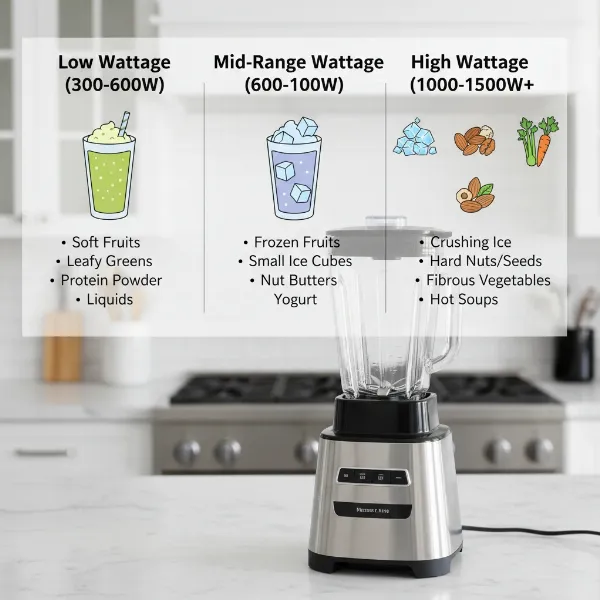
Few things are as frustrating in the kitchen as a blender that refuses to cooperate, especially when its blade decides to seize up. As an experienced technician with over a decade in the blender industry, I understand the annoyance and potential hazards a stuck blender blade presents. This comprehensive guide will walk you through safe and effective methods to unjam your blender blade and keep it running smoothly, drawing on practical knowledge to tackle common issues from simple food obstructions to stubborn mechanical binds.
Detailed Guide to Unjamming Your Blender Blade
When your blender blade gets stuck, it’s more than just an inconvenience; it can signal underlying issues that, if ignored, might lead to more significant problems or even safety risks. Understanding the root cause is the first step toward a safe and effective solution.
Understanding Why Your Blender Blade Gets Stuck
|
Our Picks for the Best Blender in 2026
As an Amazon Associate I earn from qualifying purchases.
|
||
| Num | Product | Action |
|---|---|---|
| 1 | Magic Bullet Blender, Small, Silver, 11 Piece Set |

|
| 2 | BLACK+DECKER PowerCrush Multi-Function Blender with 6-Cup Glass Jar, 4 Speed Settings, Silver |
|
| 3 | BLACK+DECKER Crush Master Blender, 10-Speeds with Stainless Steel Blades, Black, BL2010BP |
|
| 4 | Aeitto Blenders for Kitchen with 1800W Motor, 68Oz. Large Capacity, 2-in-1 Blender & Grinder Combo, BPA-Free Countertop Professional Blender for Smoothies, Ice Crush, Frozen Drinks, Black |
|
| 5 | Ninja Professional Blender, Smoothie Blender, Drink Mixer, Grinder, Ice Crusher, Frozen Fruit Blending | Professional 1000 W Power, Total Crushing ™ Technology, XL 72-oz. Pitcher Black, Grey, BL610 |
|
| 6 | Ninja Professional Plus Blender | Max Power Smoothie Blender, Ice Cream Maker, Frozen Drink Mixer & Margarita Machine | 3 Auto IQ™ Presets, 1400 W, 72oz Total Crushing Pitcher | Dark Grey, BN701 |
|
| 7 | Hamilton Beach Power Elite Wave Action Blender For Smoothies, 40 Oz Glass Jar, 12 Functions Including Puree, Crush Ice, 700 Watts - Black (58148A) |
|
| 8 | nutribullet Full-Size Blender Combo 1200W – NBF50500 - Dark Gray |
|
| 9 | bella 10 Speed Countertop Blender, Juicer & Smoothie Maker, Fits-anywhere™ Kitchenware, Slim Flip & Store Design, Dishwasher Safe 48oz Capacity Pitcher & Lid, Stainless Steel Blade, 450 Watt, Oatmilk |
|
| 10 | Ninja UltraCrush Professional Blender | 1000W, XL 72-oz.* Pitcher | Total Crushing Technology | 3 Manual Speeds for Ice Crushing, Smoothies, Sauces & More | Full-Size Blender | Black | BP201 |
|
Blender blades can become stuck for several reasons, ranging from simple user errors to mechanical wear and tear. One of the most common culprits is food obstruction. Large or tough ingredients like ice cubes, fibrous vegetables, or even too many frozen fruits can overwhelm the blade, causing it to halt. If you’ve ever tried to blend a mixture with insufficient liquid, you’ll know how quickly ingredients can form a dense block, preventing the blades from rotating freely.
Another frequent issue, particularly with detachable blade assemblies or bases, is the buildup of dried food residue or gunk. Over time, tiny particles of food and liquid can seep into the threading or around the blade bearings, drying and hardening into a stubborn cement-like bond that “water-locks” or “pressure-locks” the components. This makes unscrewing the base or spinning the blades incredibly difficult.
Mechanical failures are also a possibility. A stripped drive coupling on the motor base or the blade assembly itself can prevent the motor’s power from transferring to the blades. Similarly, worn bearings within the blade assembly can cause friction and stiffness, leading to a blade that feels stiff or completely stuck. These components naturally wear down with heavy use, often presenting as a grinding noise before a full jam. Improper assembly of hand blender shafts can also lead to jamming.
Essential Safety Steps Before You Begin
Before attempting any troubleshooting or repair, safety must be your absolute priority. Blender blades are exceptionally sharp, and electrical components can pose a shock hazard.
- Always Unplug Your Blender: This is the most critical step. Ensure the blender is completely disconnected from its power source to prevent accidental activation and serious injury. Never work on a blender that is still plugged in, even if it’s turned off.
- Clear Your Workspace: Remove any surrounding items or liquids to create a clean, unobstructed area for working.
- Protect Your Hands: Consider wearing sturdy kitchen gloves or work gloves to protect your hands from the sharp blades. Even when stationary, the edges can cause cuts.
- Empty the Jar: Carefully remove all ingredients from the blender jar. This will give you a clear view of the blades and any obstructions, and reduce the chance of making a mess.
Step-by-Step Solutions for a Stuck Blender Blade
Once you’ve taken the necessary safety precautions, you can begin to systematically address the stuck blade. The approach depends on whether the blades are stuck due to food, a jammed blade assembly, or a “frozen” base.
1. Clearing Food Obstructions
If the blades stopped during blending, it’s likely a food obstruction.
- Unplug and Empty: Ensure the blender is unplugged and empty the jar of all ingredients.
- Inspect and Remove: Carefully inspect around and under the blades for any large pieces of food, ice, or fibrous material. Use a spoon, spatula, or even a pair of tongs to gently dislodge and remove any visible obstructions. Avoid using your bare hands.
- Manual Rotation: With the blender still unplugged, try to gently rotate the blades manually. If they now move freely, the obstruction was the issue.
- Test: Reassemble the blender, add fresh ingredients (starting with liquids), and test on a low speed.
2. Loosening a Stuck Blade Assembly or Base
Often, the entire blade assembly, or the base that holds it, becomes stuck to the blender jar. This is frequently due to dried residue or a vacuum seal.
- The Hot Water Method (for tight bases): If the blade assembly or base is screwed onto the bottom of the jar and won’t budge, hot water can help. Run the base of the blender jar under hot tap water for a minute or two. The heat can cause plastic components to expand slightly, breaking the seal and making it easier to twist.
- The Cold Water/Ice Method (for pressure locks): Conversely, sometimes a “pressure-lock” is the culprit. Try adding ice cubes or very cold water to the inside of the jar while running the outside of the base under hot water. The contrasting temperatures can sometimes break the seal.
- Leverage with the Motor Base: For blenders where the jug twists onto the motor base, you can use the motor unit for extra leverage. Place the blender jar onto the motor base as if you were going to use it. Now, holding the motor base firmly (or placing it between your feet for stability), twist the jug counter-clockwise. The stationary motor base provides the necessary resistance to help loosen a stubborn base.
- Pliers and Cloth (for hand blenders or stubborn units): For hand blenders where the shaft is stuck, or for incredibly tight jar bases, you might need extra grip. Wrap the blade shaft or the base component with a thick cloth or paper towel to protect it and provide grip. Using two pliers or wrenches, carefully clamp the blade shaft with one and the main housing/jar base with the other. Gently apply twisting pressure in the loosening direction (usually counter-clockwise), being careful not to over-exert and damage the plastic.
- Tapping to Break a Vacuum Seal: For very tight jar lids or bases, a vacuum seal might be in play. Try gently tapping around the rim of the lid or base on a hard surface, or lightly strike all sides with the back of a heavy knife to create tiny dents that can break the seal. Rubber pads designed for jar opening can also provide increased friction.
3. Addressing Stiff or Non-Spinning Blades (Internal Issues)
If the blades are clean but still feel stiff or won’t spin even after clearing obstructions and loosening the base, the issue might be internal, related to the bearings or coupling.
- Boiling Water for Stiff Bearings: If the blades are stiff and hard to turn manually, dried residue or old lubricant around the blade bearings might be the cause. Boil a kettle of water and carefully pour hot water around the outside of the blade assembly where it meets the jar (if detachable) or directly into the jar (if it’s a fixed blade design), letting it sit for a few minutes. While pouring, gently try to turn the blade. This can help dissolve gunk or loosen old grease. Repeat if necessary, gradually trying to rotate the blades.
- Inspect Drive Coupling: If the blender motor runs but the blades don’t spin, the drive coupling (the rubber or plastic gear on the motor base) or the corresponding part on the blade assembly might be stripped. Unplug the blender, remove the jar, and visually inspect these components for wear or damage. A stripped coupling often requires replacement.
Advanced Techniques for Stubborn Jams
If, after trying the above methods, your blender blade remains stubbornly stuck, it might indicate a more significant internal problem, such as completely seized bearings or a damaged motor assembly.
> “While many blender jams are resolvable at home with simple tools and techniques, persistent stiffness or unusual noises often point to worn internal components like bearings. Attempting to force these can cause irreversible damage, so knowing when to seek professional help is key.” – John Smith, Senior Blender Repair Technician
In such cases, it’s generally best to:
- Consult Your Manual: Your blender’s user manual might offer specific troubleshooting steps or diagrams for disassembling the blade assembly.
- Seek Professional Servicing: For advanced issues like worn bearings or a failing motor, it’s advisable to take your blender to a qualified appliance repair technician. Attempting complex repairs without proper tools or knowledge could void your warranty or cause further damage.
- Consider Replacement: If the blender is old, heavily used, or the cost of repair outweighs its value, replacing the blade assembly or even the entire blender might be the most economical solution. Many blade issues are covered under warranty, so keep your purchase receipt and model details handy when contacting support. [cite: 1 (from prevention search)]
Preventing Future Blender Blade Jams
Prevention is always better than cure. By adopting good habits, you can significantly reduce the likelihood of your blender blade getting stuck again.
- Proper Ingredient Loading: This is paramount. Always add liquids first, followed by soft ingredients like leafy greens, then heavier items like frozen fruits, ice, and nuts. This creates a vortex that pulls ingredients down into the blades. [cite: 2 (from prevention search), 5 (from prevention search)]
- Don’t Overfill: Respect your blender’s maximum fill line. Overloading the jar puts excessive strain on the motor and blades, increasing the risk of jamming. [cite: 2 (from jamming search)]
- Start on Low Speed, Then Increase Gradually: Begin blending on a low speed to break down larger pieces and create initial movement before gradually increasing to higher speeds. This prevents ingredients from simply being pushed up against the sides of the jar, creating an air pocket around the blades. [cite: 2, 4 (from prevention search)]
- Use a Tamper: If your blender comes with a tamper (plunger), use it to push ingredients down towards the blades, especially when making thick mixtures like nut butters or frozen desserts. Never use a tamper without the lid on, or with the blender running at high speed.
- Regular and Thorough Cleaning: Immediately after each use, clean your blender jar and blade assembly. For liquid blends, a quick self-clean with warm water and a drop of dish soap usually suffices. For stubborn residues, a paste of baking soda and water, left to sit for 10-15 minutes, can effectively break down oils and proteins. Pay special attention to the areas around the blade joints and threads where food tends to accumulate. [cite: 1 (from prevention search), 3 (from prevention search)]
- Dry Components Completely: After cleaning, ensure all parts, especially the blade assembly and seals, are thoroughly dried before reassembly and storage. Moisture can lead to rust and bacterial growth, which can contribute to stiffness or damage over time. Avoid soaking blade assemblies for extended periods. [cite: 1 (from prevention search)]
- Correct Assembly and Tightening: When reassembling your blender, ensure all parts are correctly aligned and securely tightened. However, avoid overtightening the blade base, as this can damage threads or seals and make it harder to remove next time. [cite: 1, 3 (from prevention search)]
Conclusion
Dealing with a stuck blender blade can be a nuisance, but with the right approach and a focus on safety, most issues can be resolved at home. By understanding the common causes, following a methodical troubleshooting process, and implementing preventative maintenance, you can ensure your blender remains a reliable kitchen workhorse. From clearing simple food blockages to applying heat to loosen a stubborn base, these techniques will empower you to tackle common blender dilemmas confidently. Remember, a little care and attention go a long way in extending the life and performance of your appliance. What blending tips or tricks have you found most effective in keeping your blender running smoothly?
Frequently Asked Questions
What causes a blender blade to stop spinning?
A blender blade typically stops spinning due to food obstructions, such as large ice chunks or fibrous ingredients, dried food residue accumulating around the blade bearings, a “water-lock” or “pressure-lock” in the base assembly, or mechanical issues like a stripped drive coupling or worn internal bearings. Improper loading of ingredients, like adding solids before liquids, can also cause the blades to seize.
Is it safe to force a stuck blender blade?
No, it is generally not safe to force a stuck blender blade. Applying excessive force can damage the blade assembly, motor, or other components, potentially leading to costly repairs or even rendering the blender unusable. More importantly, it can cause severe cuts from the sharp blades or electrical shock if the unit is still plugged in. Always unplug the blender and use gentle, systematic methods.
How do you loosen a tight blender base?
To loosen a tight blender base, first ensure the blender is unplugged and empty. Try running the base under warm tap water to expand the plastic components, or conversely, apply cold water/ice to the inside of the jar while warming the outside to break a vacuum seal. Using the motor unit for leverage by twisting the jug firmly while it’s seated on the base can also be effective. For stubborn cases, wrapping the base with a cloth and using pliers for extra grip can help.
Can dried food cause a blender blade to jam?
Yes, dried food residue is a very common cause of blender blade jams. Over time, tiny particles of food and liquids can seep into the crevices around the blade assembly and its bearings, drying and hardening. This buildup acts like a cement, creating a “pressure-lock” that prevents the blades from rotating or the base from unscrewing, leading to stiffness or complete seizing. Regular and thorough cleaning is essential to prevent this.
When should I replace my blender blade assembly?
You should consider replacing your blender blade assembly if the blades remain stiff or stuck after cleaning and troubleshooting, if you notice excessive wobbling, grinding noises during operation (indicating worn bearings), visible damage to the blades or seals, or if your blender begins to leak from the bottom. Often, replacing the entire blade assembly is more practical than attempting to repair internal components like bearings.